Ransomware Recovery: Where to Find Public Decryptors Before You Pay
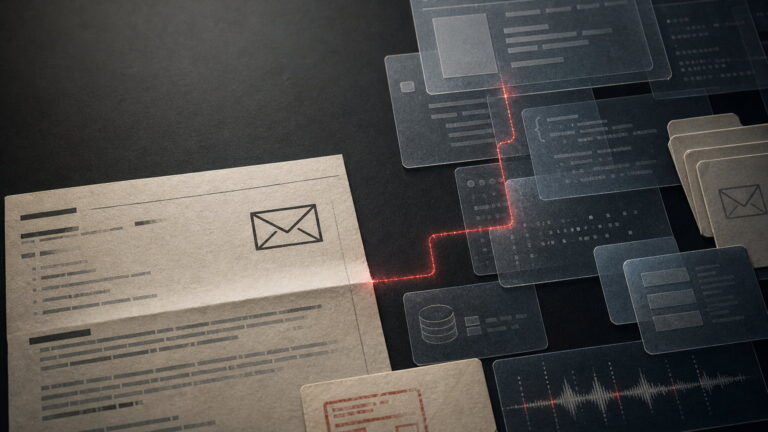
A finance team opens Monday with a familiar but ugly pattern: file extensions changed overnight, a ransom note in every shared folder, backups suddenly under suspicion, and executives asking a deceptively simple question — “Can we decrypt it?”
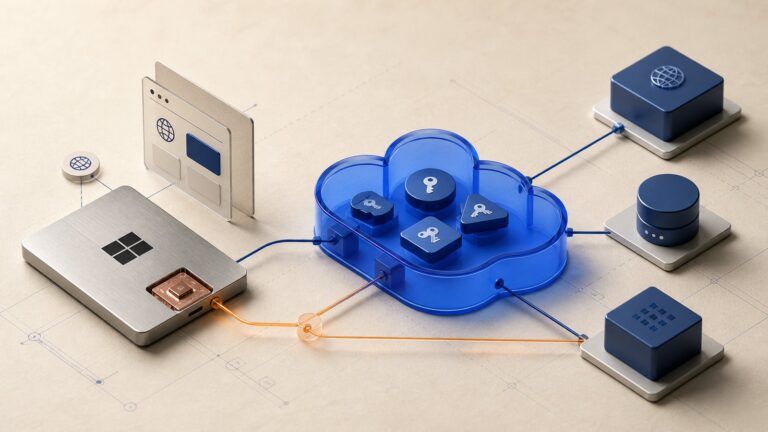
The honest answer is usually: maybe, but not because ransomware encryption is easy to break. Modern ransomware crews often combine fast symmetric encryption for files with asymmetric cryptography to protect the keys. When implemented correctly, there is no magic universal decryptor. What exists instead is a patchwork of opportunities: leaked keys, law-enforcement seizures, implementation mistakes, abandoned families, offline keys, known-plaintext weaknesses, and vendor-built recovery tools for specific variants.
This is why a disciplined first step matters. Before negotiating, rebuilding, or running random “decryptor” executables from a search result, defenders should identify the ransomware family and check trusted public decryptor repositories.
The operational reality: ransomware is not one problem
Ransomware is often discussed as a single threat category, but recovery depends on implementation details. Two incidents can look similar to leadership — encrypted files, downtime, ransom demand — while being completely different from a cryptographic perspective.
In one case, a low-quality locker may reuse keys or derive them from predictable values. In another, a mature RaaS family may generate per-file keys, protect them with strong public-key cryptography, and never leave recoverable material on disk. The first case may be recoverable. The second may be mathematically out of reach without backups, captured keys, memory artifacts, or attacker-side material.
That distinction is critical: a decryptor is not a generic ransomware remover. It is usually a tool for a specific family, version, campaign, or key set.
Why public decryptors exist
Public decryptors usually appear for one of five reasons:
- Cryptographic implementation flaws: weak random generation, reused keystreams, predictable keys, static secrets, or broken file formats.
- Known-plaintext recovery: the attacker’s encryption routine leaks enough structure that an original/encrypted file pair helps recover other files.
- Leaked or seized keys: law enforcement, researchers, or infrastructure takedowns recover private keys or victim key databases.
- Abandoned or poorly maintained families: older ransomware families may have been fully reverse engineered.
- Offline-key scenarios: some ransomware uses fallback keys when it cannot reach its command-and-control infrastructure.
The implication for incident responders is uncomfortable but useful: the existence of a decryptor for a ransomware name does not guarantee recovery for your incident. The exact variant, extension, ransom note, victim ID, timestamp, and encryption mode matter.
Trusted places to check for public decryptors
1. No More Ransom
No More Ransom is the first place I would check. It is a joint initiative supported by law enforcement and security partners, and it maintains a searchable directory of free decryption tools.
Its Crypto Sheriff workflow is especially useful when the family is unknown. You can submit a ransom note and encrypted file samples to help identify whether a matching decryptor exists. The project also clearly warns that not every ransomware family has a solution and that the malware should be removed before attempting decryption.
Recent entries shown by No More Ransom include families such as Phobos/8Base, BlackBasta, Akira, LockBit 3.0, Rhysida, BianLian, and others. Availability does not mean universal success; it means there is a known tool or key path worth validating.
2. Emsisoft ransomware decryption tools
Emsisoft maintains a large set of free ransomware decryptors. Their pages usually include family-specific notes, version limitations, usage guidance, and warnings that tools may only work for specific ransomware versions.
This detail matters. A decryptor released for a vulnerable build may fail against a later build after the operators fix their cryptography. Treat the tool’s “supported variant” language as part of the evidence, not as marketing copy.
3. Kaspersky No Ransom
Kaspersky’s No Ransom portal hosts several decryptors, including tools such as RakhniDecryptor and RannohDecryptor, with family coverage spanning multiple older ransomware lines. Kaspersky’s guidance is also consistent with the operational order defenders should follow: remove the malware first, read the guide, then attempt decryption.
4. Avast / AVG decryptors
Avast’s ransomware decryption tools have historically covered families such as Babuk, Akira, BianLian, and others. Some of these tools came from public research, leaked source code, or analysis of specific variants. Again, the family name alone is not enough — read the tool notes and match the extension, ransom note, and timeframe.
5. Vendor and researcher advisories
Some decryptors start as research releases before being mirrored by public portals. A good example is SRLabs’ Black Basta Buster, which documented a recoverability window for Black Basta files encrypted between November 2022 and December 2023 under specific known-plaintext conditions. That kind of work is valuable because it explains not just that a tool exists, but why it works and where it stops working.
A safe workflow before running any decryptor
Running a decryptor is still an invasive recovery action. Treat it like evidence handling, not like installing a utility.
- Preserve copies first. Never test against the only copy of encrypted data. Work from forensic copies or snapshots.
- Identify the family. Use ransom note names, extensions, file footers, victim IDs, and tools such as Crypto Sheriff.
- Remove or isolate the malware. If the ransomware is still active, decrypted files may be encrypted again.
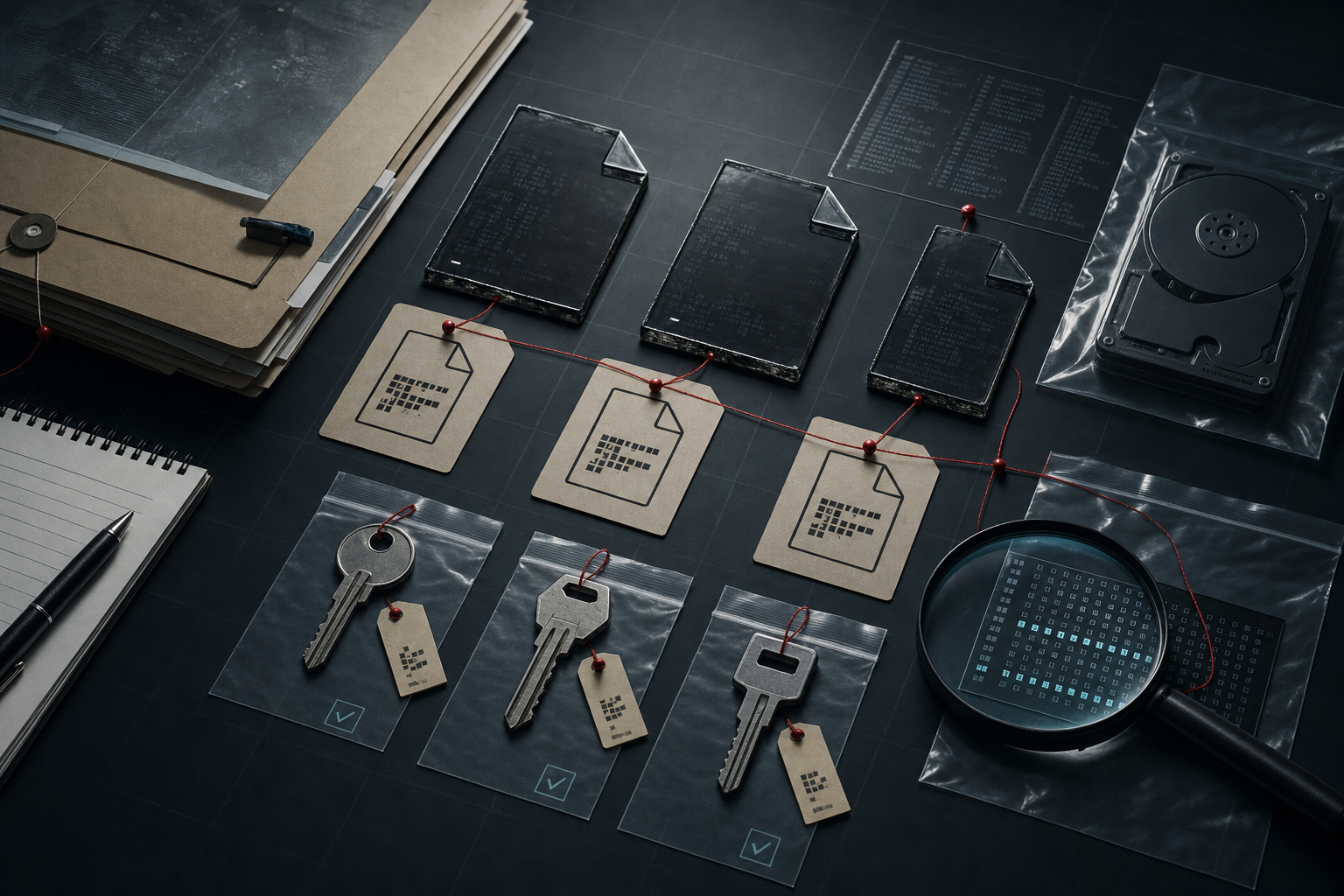
- Collect evidence. Keep ransom notes, encrypted samples, original/encrypted pairs, logs, memory dumps if available, and endpoint telemetry.
- Read the decryptor guide. Many tools require an original/encrypted pair or only support certain variants.
- Test on a small directory. Validate file integrity before scaling recovery.
- Log every action. Track tool version, command line, affected paths, success/failure counts, and hashes where practical.
What defenders should not do
- Do not download decryptors from random SEO pages. Fake decryptors are an obvious malware delivery path.
- Do not rename files blindly. Some decryptors rely on the encrypted filename structure.
- Do not delete ransom notes. They often contain victim IDs and variant clues.
- Do not run multiple tools against the same only-copy dataset. Failed recovery attempts can make later forensic work harder.
- Do not assume “same extension” means same ransomware. Extensions are weak indicators; families and affiliates reuse patterns.
How attackers think about encryption
From the attacker’s side, encryption is not the whole operation. It is the pressure mechanism. The real business model depends on reliable denial of access, evidence of impact, negotiation leverage, and the victim’s recovery constraints.
That is why mature groups spend effort on deleting shadow copies, targeting backups, encrypting virtual disks, stopping databases, and timing execution outside business hours. The cryptography may be strong, but the operational impact comes from combining encryption with environment knowledge.
For defenders, that means public decryptors are only one branch of recovery. The broader strategy still includes backup validation, identity containment, persistence removal, legal reporting, communications, and root-cause analysis.
Strategic takeaways
- Public decryptors are real, but they are variant-specific, not universal.
- No More Ransom should be the first stop when identifying possible free recovery paths.
- A decryptor’s limitations are as important as its download link.
- Known-plaintext pairs, ransom notes, and encrypted samples can determine whether recovery is possible.
- Backups remain the most reliable “decryptor” when cryptography is implemented correctly.
- Never let urgency push the team into running untrusted tools against production evidence.
The most useful question after a ransomware event is not “Is there a decryptor?” It is:
What exact family, variant, key path, and file format are we dealing with — and what evidence do we have to prove recovery is possible?
That question turns panic into a technical process. It will not always produce a happy answer, but it prevents the worst one: destroying the remaining evidence while chasing a fake promise of recovery.
References
- No More Ransom — Decryption Tools
- No More Ransom — Crypto Sheriff
- CISA — StopRansomware.gov
- Emsisoft — Free Ransomware Decryption Tools
- Kaspersky — No Ransom
- Avast — Ransomware Decryption Tools
- SRLabs — Black Basta Buster
💜 Enjoyed this content? Support the blog with USDT (TRC20):
TX7obcjHQbDUXb4mGqoASEu1QFTKT2CFGG