AI as C2: 5 Risks and Defenses for Blue Team
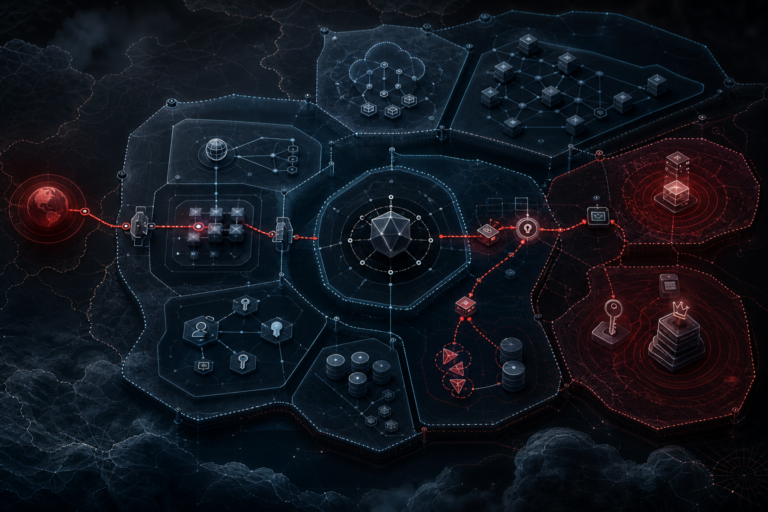
AI tools with terminal access can function as C2 infrastructure without custom malware. That is the core point of this article: to show the real risk, the detection signals, and the most effective defensive controls.
In this guide, you will see the risk, the indicators, and the priority defenses. In addition, each section includes practical actions for SOC and Blue Team.
AI as C2: what changes in practice
In a traditional C2 setup, the attacker needs to develop or deploy a malicious agent. In the AI-assisted scenario, part of that effort disappears because the assistant itself already provides operational capabilities:
- Communication channel: legitimate HTTPS APIs with encrypted traffic.
- Command execution: shell/terminal access and task automation.
- Data collection: reading files, logs, and local artifacts.
- Exfiltration: sending results through the tool’s own session.
- Behavioral evasion: activity that resembles normal administrative use.
This does not eliminate the need for initial access, but it reduces operational friction for command, collection, and data movement.
Attack flow (lab view)
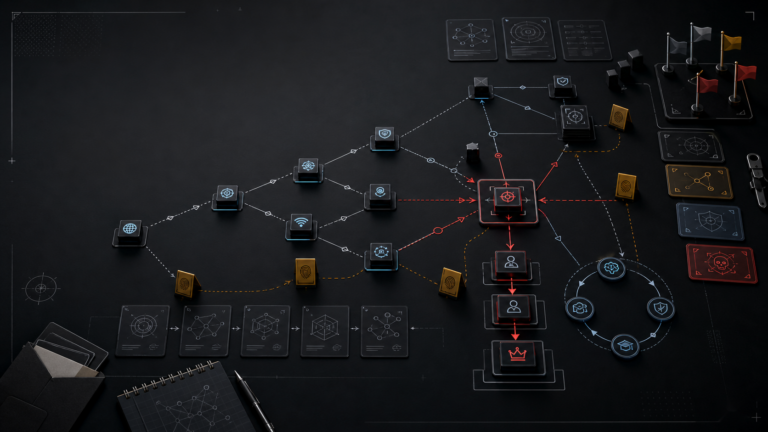
In a controlled and authorized environment, the flow usually follows four phases:
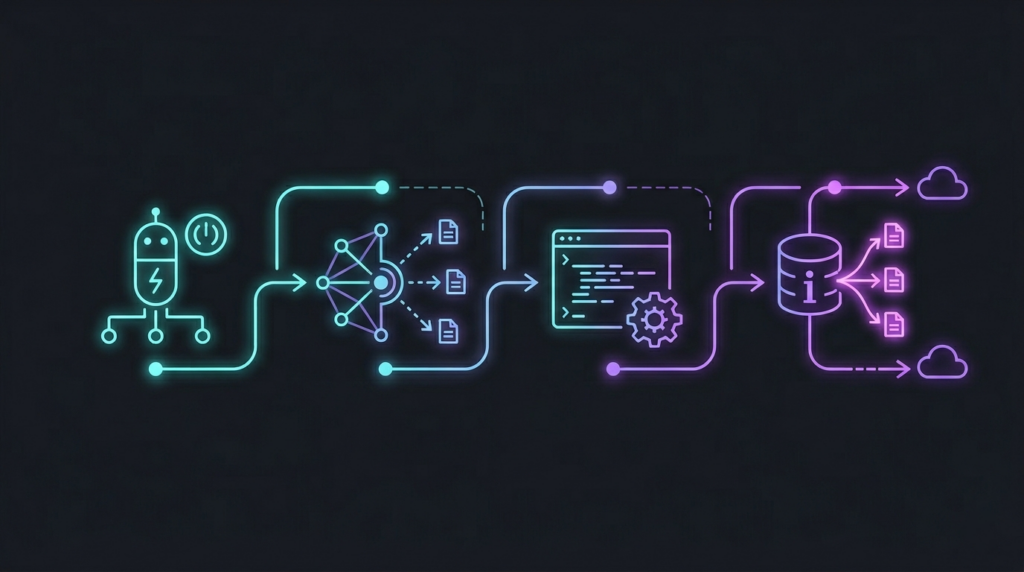
- Agent initialization: AI tool configured on a compromised host.
- Reconnaissance: inventory of system, network, and exposed credentials.
- Prompt-driven execution: natural-language commands become actions on the host.
- Stealthy exfiltration: data output encapsulated in legitimate API traffic.
Examples of tasks an attacker may request
- List interfaces and routes to map the local network.
- Search for
.envfiles, tokens, and keys in sensitive directories. - Correlate processes, services, and exposed ports.
- Summarize findings in a format ready for the next operational step.
Why detection is harder
1) There is no dedicated malicious binary
The observed process may be a legitimate AI client. Rules based only on signatures have low effectiveness.
2) Encrypted traffic to popular destinations
Connections to well-known APIs blend into legitimate traffic from development teams.
3) “Normal” commands in an anomalous context
Commands such as cat, ls, ps, and find are not malicious by themselves. The relevant indicator is the usage pattern and the asset where it occurs.
4) Persistence without a classic artifact
There is often no malicious cron job, strange service, or dropper. The session is reactivated by the operator as needed.
5 high-impact defensive controls
1. Egress governance for AI APIs
- Allow access only for authorized assets and teams.
- Apply policies by identity, not just by IP.
- Alert on atypical call volume and patterns.
2. Behavioral detection on the endpoint
- Map process baselines by machine profile.
- Detect unusual sequences: enumeration + bulk reading + compression/exfiltration.
3. Network segmentation and least privilege
- Production servers without unrestricted direct internet access.
- Mandatory bastion/proxy for administration.
- Credentials with minimal scope and frequent rotation.
4. DLP focused on secrets and critical data
- Monitor reads of private keys, secret files, and dumps.
- Block or quarantine transfers containing sensitive patterns.
5. Prompt telemetry and audit trail
- Log automated actions executed by assistants.
- Correlate command, user, host, and network destination.
Practical detection rules (Blue Team)
Useful signals for detection engineering include:
- A non-dev host launching an AI client with shell access.
- Spikes in reads inside credential directories.
- Long sessions with a sequence of discovery and collection.
- Egress to AI APIs outside the expected operational window.
Technical references
- OWASP Top 10 for LLM Applications
- MITRE ATLAS — AML.T0051
- CISA — AI Cybersecurity Collaboration Playbook
Conclusion
The risk of “AI as C2” is less about a new malware family and more about abusing legitimate capabilities. For defenders, an effective response combines egress control, behavioral detection, and context-driven observability.
If your organization uses assistants with command-execution capability, treat that as a production attack surface — with policy, monitoring, and response.
Disclaimer: educational content for research and defense. Any testing should occur only in authorized and controlled environments.
💜 Enjoyed this content? Support the blog with USDT (TRC20):
TX7obcjHQbDUXb4mGqoASEu1QFTKT2CFGG